Christmas is a time for cherished traditions; chestnuts roasting on an open fire, sleigh bells ringing in the frosty air, trimming the tree and going to grandmother’s house over the river and through the woods, and–watching fireworks in the yard with your family?
On Christmas Day 1883, Lawrenceburg residents were treated to a downtown fireworks display. As local court official W.T. Nixon wrote in his diary, “‘Old Santa’ came to our house last night and made us all happy. As usual the children’s stockings were well filled with goodies and small presents…and all of us happy and glad Christmas is here. We were up betimes to see some fire works in our front yard.”
Nixon and his family watched the Yuletide fireworks show from their front yard on Pulaski Street in Lawrenceburg, where The Hidden Garden is today. Although fireworks are now most associated with Independence Day and New Year’s Eve, they once served as an all-purpose outlet of celebration.
In 1879, Nixon wrote, “the holidays draw on apace and soon the festive Juvenile will glory in the noise and sulphrous smoke of that heathenish invention…the fire cracker.”
Happy National Christmas Lights Day! Be sure to check out the dazzling Christmas light display in Lawrence County’s Amish community!
All kidding aside, many visitors often ask why the Amish don’t believe in using electricity.
The Amish of Lawrence County, who first settled here eighty years ago, are part of the Old Order. In fact, Lawrence County is home to the largest population of Old Order Amish people in the South.
Old Order religious beliefs, including their prohibition on electricity and motor vehicle usage, are grounded in centuries of tradition intended to maintain a life of simplicity and austerity. As Jonas Miller writes in his excellent book ‘The Ex-Amish Kid,’ “the Old Order Amish shun all modern conveniences such as electricity and automobiles because that is the way they were set up from the beginning, and that is the way they are going to keep it.”
These traditional Old Order convictions extend to every part of Amish life, from the clothing they wear to the type of facial hair the men can have. And while they may not have Christmas lights, their shops produce some excellent Christmas gifts, and they are open for business every day except Sunday.
How many people do you think you could get to verify that you are a good person?
One Lawrence County man got the signatures of 190 people!
The reason? Civil War veteran drama.
In the spring of 1906, 78-year-old James S. Finley of Lawrenceburg applied for a pension from the State of Tennessee for his service in the Confederate army. In 1861, Finley enlisted in Company A of the 32nd Tennessee Infantry. He was a Methodist pastor in civilian life, and on October 28, 1861, he was elected chaplain of his regiment.
After the fall of Fort Donelson and the capture of a large portion of the Army of Tennessee in February 1862, Finley claims that he was ordered to return home until further notice. He says that when the men of his regiment were exchanged in October 1862, he reported to the conscription officer, who promptly issued him a discharge due to his status as a minister. He says that for the duration of the war, he “lived a quiet and peaceable life,” minding his own business at his home in Marshall County.
Finley’s account and his extant service record satisfied the Tennessee Board of Pension Examiners, and he was allowed to draw his $5 per month–once. After one check, Finley’s pension stopped and he was given no reason why.
As it turned out, some local Confederate veterans were outraged that Finley’s name was added to the pension roll, and they wasted no time letting the state know. Finley found out about this when the Pension Board mistakenly sent him a letter that was probably intended for the governor. It said:
“As soon as his name appeared in the published list of new pensioners, we received protests from some of the leading citizens of Lawrence County…and from Marshall County where he lived during the war. It was charged that he saw little or no service in the army, that he left the army in 1862, and that thereafter he affiliated with the other side, acting as pilot and informer for the Federal troops in this section of the state.”
Finley’s neighbor, the schoolteacher and Union veteran J.J.W. Starr, wrote a flurry of letters to the governor and the Pension Board denying the charges and insisting that Finley be allowed a fair and impartial hearing regarding the case.
T.H. Meredith, a local Confederate veteran and court official, did not mince words in his angry letters to the Pension Board. He claimed that Finley helped the Union army during the war, that he began the first Northern Methodist church ever seen in the area, that he consistently voted the Republican ticket, and that he was “a low-down cuss, and he deserves a kick from all honest men.” Meredith had some harsh words for J.J.W. Starr, too, calling him “the most contemptible Yankee that ever struck our county,” and that he “meddles in a great many things that do not concern him.”
John B. Kennedy, another local Confederate veteran and court official, took aim at Finley’s personal life, claiming that Finley had been married three times; the first wife “he treated so shamefully and so brutally…that she finally went insane and died,” the second he divorced, and the third he ordered from a “matrimonial service.” Kennedy went on to say that Finley “is the worst old Philistine who has so far escaped the jawbone.”
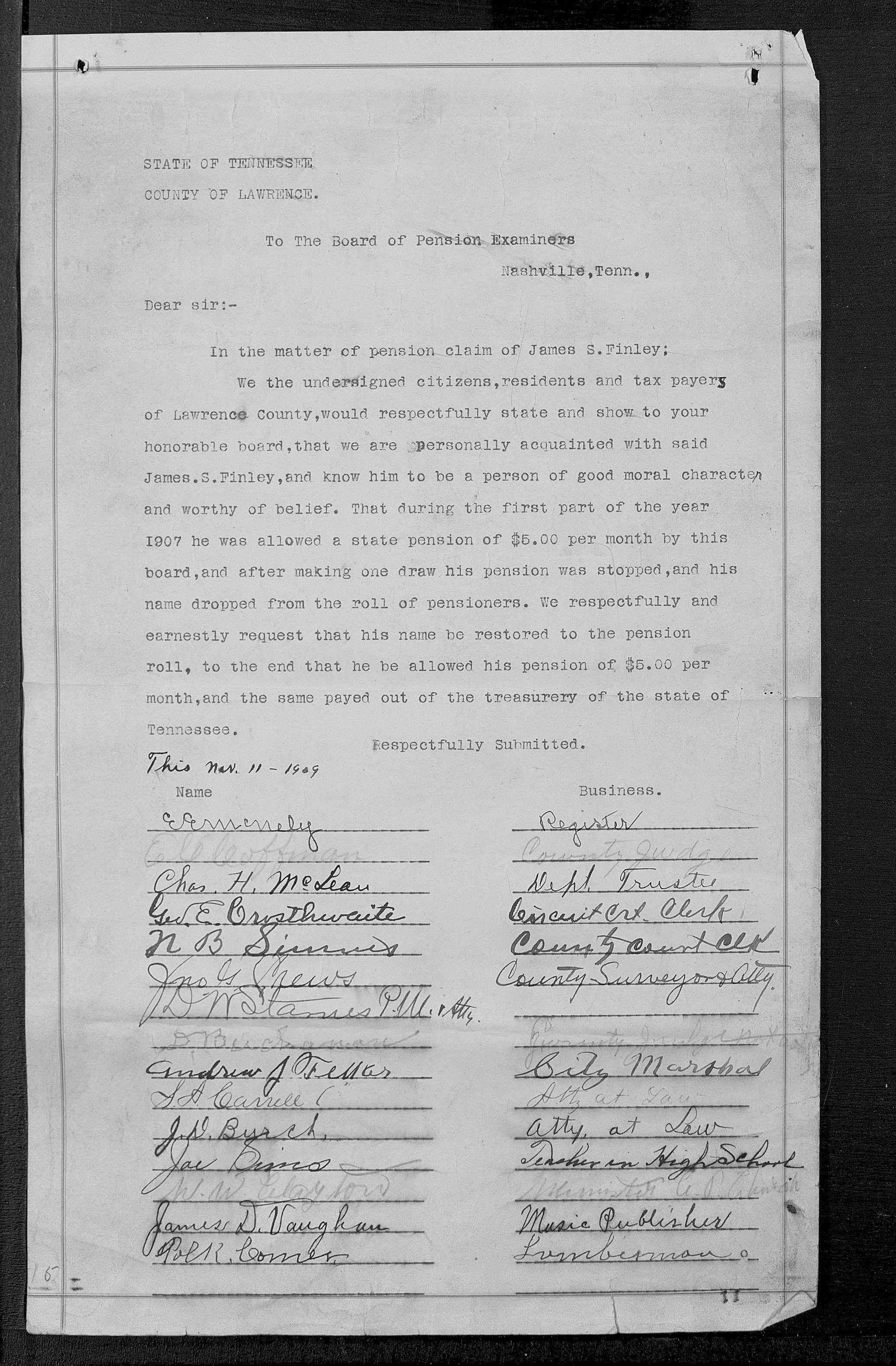
In the autumn of 1909, a petition circulated requesting Finley’s reinstatement on the roll, stating that he was “a person of good moral character and worthy of belief.”
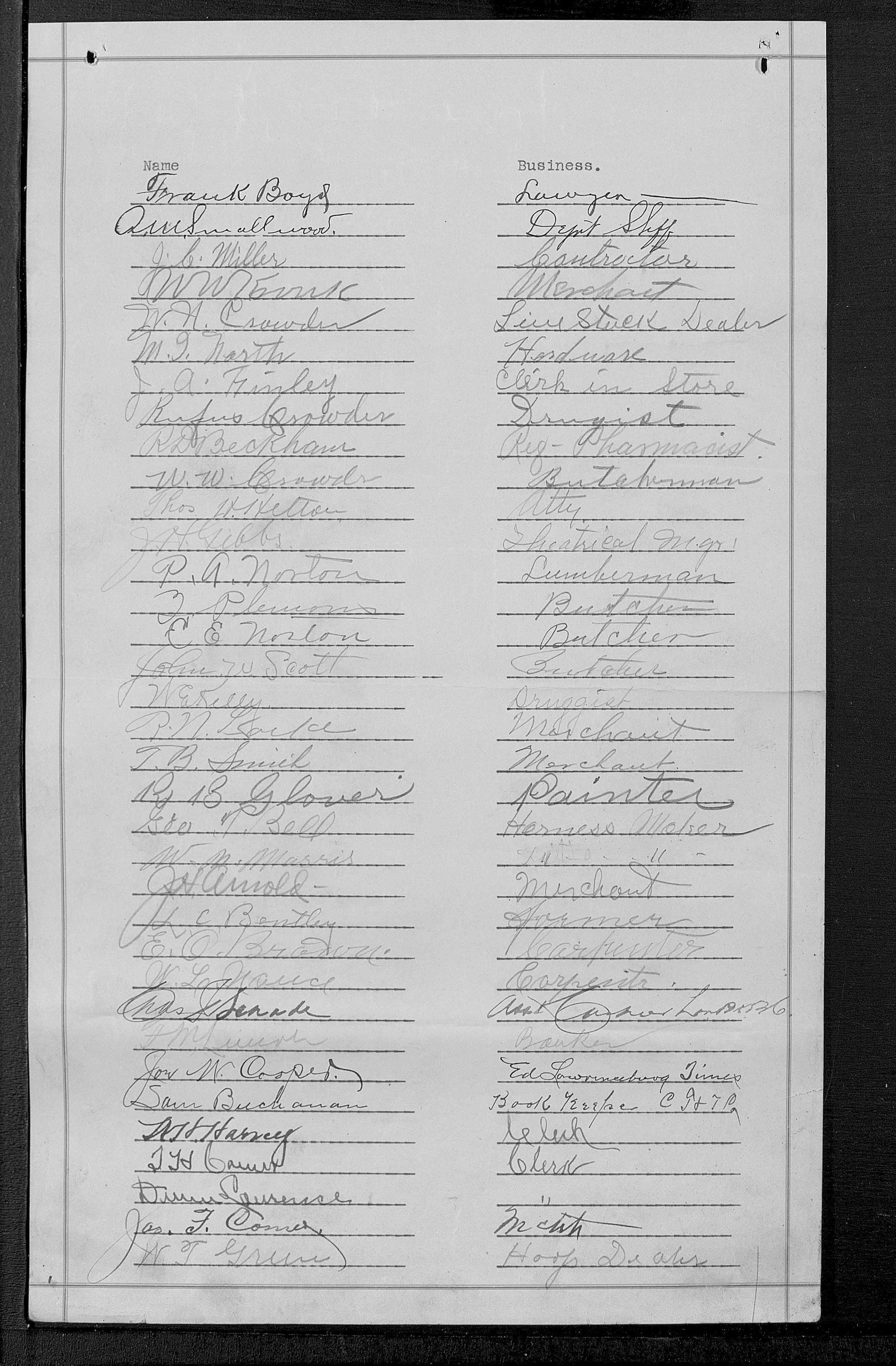
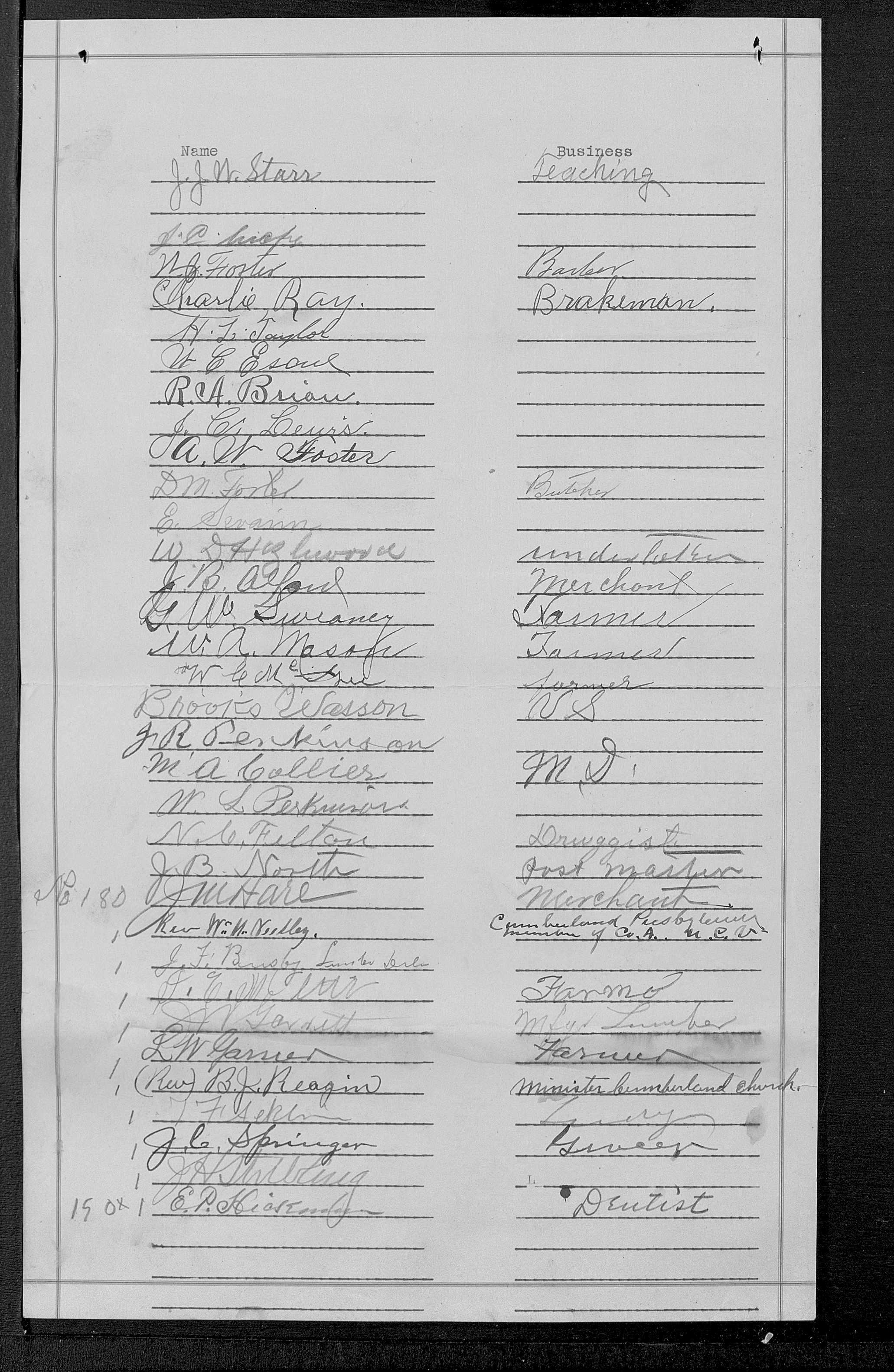
The petition, seen here, is impressive. It contains 190 names of men from a variety of walks of life. James D. Vaughan, the father of Southern Gospel music, signed it, as did the mayor, a doctor, a dentist, multiple pastors, several Civil War veterans of both sides, as well as butchers, merchants, painters, carpenters, harness makers, brakemen, newspaper editors, bakers, and the city marshal.
Finley died in 1911, but was never reinstated to the pension roll. He is buried in Mimosa Cemetery in Lawrenceburg, surrounded by both his detractors and most of the 190 men who signed their names to vouch for his character.
July 1884 was windy in Lawrence County. Brief, loud summer storms raked the fields, watering the earth but bending and damaging corn stalks throughout the area. And on the 30th, in the midst of that stormy summer, one of the most influential men in the community of Appleton breathed his last.
News of the passing reached Lawrenceburg by special messenger the next morning, and a local minister set out from his home on Pulaski Street to fulfill his last promise to an old friend.
Colonel Alexander G. Dobbins was 68 years old when he took his last breath. He died of cancer, no doubt surrounded by family in the midst of his massive and prosperous farm. He certainly had plenty of family left to carry on his name; his first two wives had given him five children each before dying, leaving his third and final wife–a woman eighteen years his junior–a number of stepsons to help maintain her estate.
An expert in livestock, Colonel Dobbins built a successful business empire despite his limited education. At the time of his death, he owned three mercantile houses and at least 4/5 of a square mile of land in Lawrence County’s third district. He was generous and well-liked, and very active in his masonic lodge.
Years before, Colonel Dobbins had asked his old friend W.T. Nixon to preach his funeral. And so it was, when word of the Colonel’s passing reached Lawrenceburg early the next morning, Nixon saddled his horse Old Nell and rode south to fulfill his promise.
About eight miles south of Lawrenceburg, Nixon and Old Nell were caught in a sudden violent storm and had to take shelter at the home of Rice Wilburn. When the storm let up, Wilburn joined him and they arrived at Colonel Dobbins’s home around 2:30 that afternoon.
Nixon kept his word to his old friend. He was sure to remark on the fact that Colonel Dobbins “had never taken a chew of tobacco, had never smoked a pipe, never drank a drink of whiskey and had never sworn an oath.” He was buried with full masonic honors after the sermon.
His vow completed, Nixon started back to Lawrenceburg at 5:30 and finally arrived home at 11:30 that night, the 18-mile journey taking him six hours over a very “rough road.”
Summer weather is definitely here. With temperatures forecasted to peak at 96° and a heat index of 106°, it promises to be a hot one…but it could always be worse.
On June 29, 2012, Lawrence County’s all-time high temperature record was set at 106° Fahrenheit. It was an exceptionally hot week; the next day set Lawrenceburg’s third-highest temperature record at 103° F. Our second-highest recorded temperature was 104° F, on August 15, 2007.
The 2012 Heat Wave was caused by a high-pressure ridge which trapped heat close to the ground. Nationwide, the heat wave contributed to the deaths of 82 people and shattered many temperature records. Tennessee, where the ridge settled at the end of June, was particularly hard-hit, with most of the major cities in the state setting single-day temperature records. An unconfirmed temperature of 113° F was reported in Smyrna. If accurate, this would be the highest temperature ever recorded in Tennessee history.
Lawrenceburg’s official temperature records go back to 1954. Of the top twenty hottest days on record here, fifteen have occurred since 2000.
Thanks to our friends at Tennessee Valley Weather for providing me with detailed temperature records for our area for this post!
One Lawrence County family came to the brink of disaster–but were saved by the generosity of their neighbors.
The unthinkable happened to the young family of Frank and Ada Crane of Henryville on June 21, 1905. That morning, Ada sent their two sons, six-year-old Clyde and four-year-old Ellis on an errand to Patterson’s General Store. Along the way, the boys were attacked by a rabid dog. The animal was vicious; and bit the boys repeatedly on their arms and backs. When Ada heard their cries, she managed to beat the dog away from the children.
Rabies was a potentially fatal disease in those days. Frank and Ada had to act fast. They immediately left for Columbia, to find someone to apply a madstone to the boys’ injuries. Madstones are stones found in the stomachs of cud-chewing animals which were applied to bites or wounds in hopes of drawing the poison out of the wound.
The next day, the Cranes found someone with a madstone in Columbia, but, according to the Columbia ‘Herald and Mail,’ the stone was “applied with poor results, as it would adhere to any part of the body, and even to a person who had not been bitten.” A Columbia physician recommended that the boys be sent to the Pasteur Clinic in New York City as he knew “the cure there to be a certain one.”
The problem was that the Cranes had no money for a trip to New York. Not long before the dog attack, the family lost almost everything they had in a house fire. When news of their plight spread, donations began to pour in from Henryville and Columbia. Within days, a fund of $200 was raised to get the boys to New York.
The first successful human rabies vaccine was administered by Louis Pasteur in 1885 in France. The Pasteur Institute of New York City was founded in 1895 by a bacteriologist who studied Pasteur’s methods. Frank accompanied the boys to the clinic, where they received care free of charge for eighteen days.
After the boys were successfully treated, the Cranes returned to Henryville. Newspaper accounts say that the boys “would have certainly developed hydrophobia had they not gone to New York for treatment.”
In addition to the many great dads in our county, we are also home to several “fathers” of a different type.
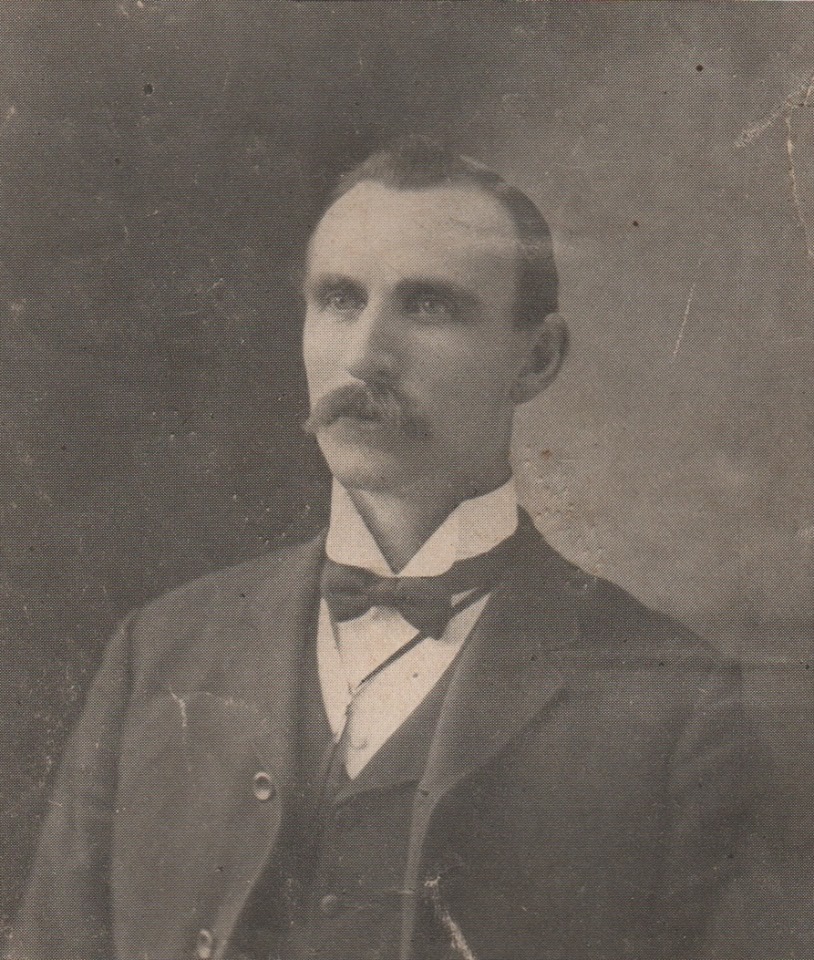
James D. Vaughan (1864-1941) was the father of Southern Gospel music. In addition to owning a music school, publishing company, record label, and radio station, Vaughan pioneered the concept of sacred music sung by male quartets, a style which became known as Southern Gospel music.
Vaughan was a skilled marketer; his radio station WOAN was the first commercially-licensed radio station in Tennessee. He wrote more than five-hundred songs and printed and sold more than six million song books from his publishing house on the Lawrenceburg Public Square.
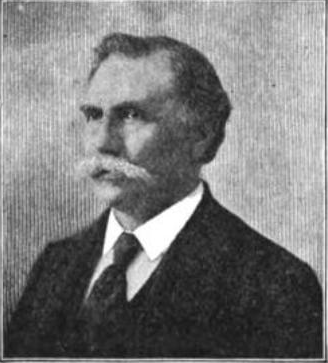
Thomas H. Paine (1836-1901) was the father of the modern Tennessee education system. Born in West Point, Paine served as the youngest member of the Tennessee House of Representatives in 1861. He raised a company of cavalry to serve the Confederate cause in 1862, and served throughout the war as a captain in the cavalry regiment of fellow-Lawrence Countian George H. Nixon.
In 1883, Paine was appointed as the 11th State Superintendent of Public Instruction by the governor. According to one early history book, while serving as state superintendent, he “was so thoroughly identified with the public school movement from the beginning that he was able to accomplish many things that form the foundation of today’s Tennessee public school system.”
In addition to streamlining Tennessee’s public education system, Paine challenged the public school system to broaden its curriculum from its base of technical and agricultural skills to include arts and literature.
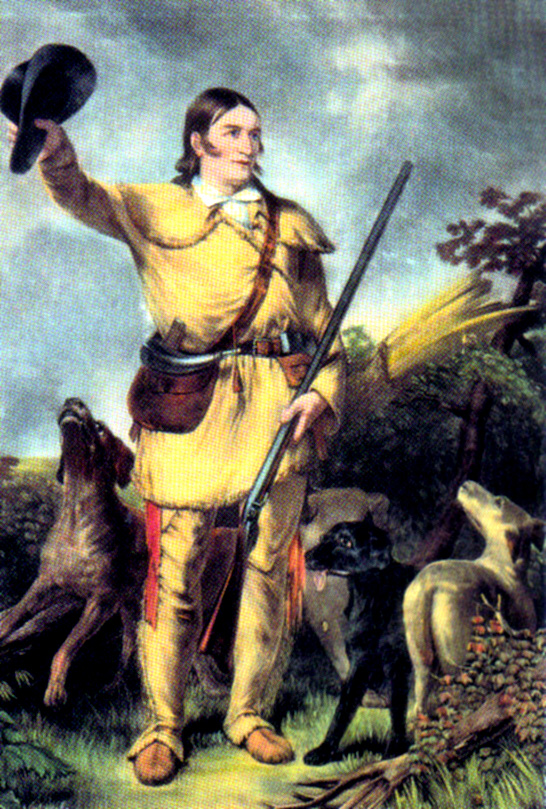
The Father of Lawrence County was none other than legendary pioneer David Crockett (1786-1836). Crockett first came to Lawrence County in 1816 and was elected as one of our first justices of the peace. He was subsequently elected as the first colonel of the county militia regiment, appointed as one of the founding commissioners of Lawrenceburg, and represented Lawrence County in the Tennessee House of Representatives. In 1922, the county erected a statue of Crockett on the Public Square to honor his role in our founding years.
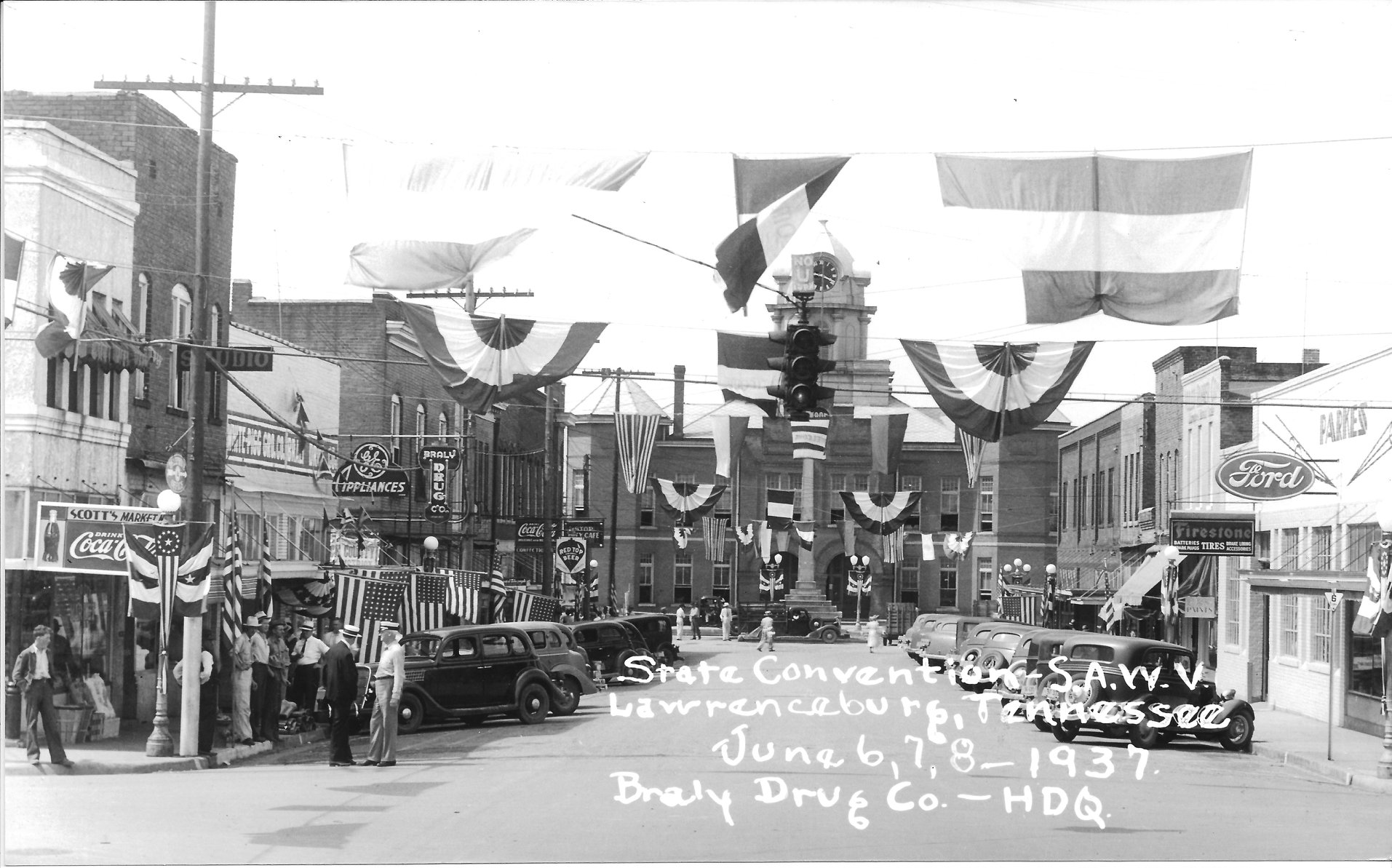
You’ve no doubt seen the historic photos at local restaurants, but do you know why North Military and Depot Streets in the city of Lawrenceburg were decked out in their patriotic finest 87 years ago this week?
From June 6-8, 1937, the Tennessee organization of Spanish-American War Veterans held their annual encampment at Lawrenceburg.
The Spanish-American War, which lasted only sixteen weeks in 1898, was sparked when the USS Maine exploded while at anchor in Havana, Cuba. Newspapers practicing yellow journalism stoked the event into a crisis. War was declared on April 21, and the United States sent troops to Spanish-held territories in the western hemisphere.
Theodore Roosevelt famously resigned as Assistant Secretary of the Navy to organize and lead a volunteer cavalry regiment in Cuba where he fought alongside former Confederate general Joe Wheeler. When the war officially ended in December, Spain granted independence to Cuba and the U.S. annexed the former Spanish possessions of Puerto Rico, Guam, and the Philippines. Filipino insurgents waged a bloody, but unsuccessful, war of independence against American occupation forces from 1899 to 1902. Full Filipino independence was not achieved until 1946.
A number of veterans organizations emerged from the Spanish-American War and the ensuing Philippine–American War. The 1937 SAWV encampment in Lawrenceburg was the fifteenth state convention of the organization and it drew nearly 1,000 members of the SAWV and the Ladies Auxiliary . The local McNeely Post No. 28 of the SAWV hosted the event, which began with memorial services on June 6 at First Baptist Church and Coleman Methodist Church.
On June 7, the veterans heard speeches from the mayor of Lawrenceburg and the Governor of Tennessee. That afternoon there was a baseball game followed by a banquet hosted by men who served in Lawrence County’s Company D, 1st Tennessee Infantry in the Philippines. Following the banquet, guests were treated to a fireworks display and a “sham battle” or reenactment at Fairview Park.
A business meeting was held on June 8 for the purpose of electing officers and selecting the site of the 1938 encampment.
On this day in 1990, Lawrenceburg native Michael Jeter won the Tony Award for best featured performer for his role as the timid bookkeeper Otto Kringelein in the Broadway musical ‘Grand Hotel.’
Jeter, a 1970 graduate of Lawrence County High School, performed in school plays but truly fell in love with theater during his time at Memphis State University. After graduating MSU in 1974 with a degree in fine arts, Jeter earned his Actors Equity union card and spent the next decade playing minor roles on television shows. He moved to New York in 1977.
But then, as he told the Memphis ‘Commercial Appeal’ in 1993, “the acting jobs dried up.” In the mid-1980s, Jeter, frustrated, depressed, and unable to find acting work, learned to type and got a job as a litigation secretary at a law firm while contemplating going to embalming school.
His luck changed in 1988. Jeter was called by the casting director of ‘Designing Women’ to play a homeless man named Calvin Klein. That role was followed soon after by calls to perform on a television show called ‘Hothouse,’ and roles in two off-Broadway plays.
Jeter was working at night for the same law firm when he got the call to audition for ‘Grand Hotel.’ In his Tony acceptance speech, Jeter acknowledged that his path to success had been difficult, but that he served as living proof that “dreams come true.”
Following his Tony, Jeter secured the role of Herman Stiles, a frustrated assistant coach on the television show ‘Evening Shade,’ a role which earned him an Emmy and four additional Emmy nominations.
Jeter’s career included roles in major films such as ‘The Green Mile,’ ‘Polar Express,’ ‘Open Range,’ ‘Waterworld,’ ‘Patch Adams,’ ‘Air Bud,’ ‘Jurassic Park 3,’ and many more. He also played the ‘Sesame Street’ character Mr. Noodle.
Michael Jeter passed away in 2003 at the age of 50.
To view Mr. Jeter’s full Tony acceptance speech, follow this link:
Could you imagine waking up to a hard frost on the ground this morning?
It happened here this week in 1883.
According to the National Weather Service, it is not unusual for our area to see a light frost in the upper-30s in early or mid-May. But generally the last “hard” frost of the year (when temps drop to 28°F or lower for more than an hour) occurs by early April.
This wasn’t always the case, however.
On May 24, 1883, Lawrence County court official W.T. Nixon wrote in his diary, “There was quite a heavy frost last night and things look ‘peaked’ this morning. The beans and other things look burned and it is cold enough for fires and overcoats.”
The late “heavy frost” wasn’t just in Lawrence County, and it was apparently not a single-night occurrence. The Nashville ‘Daily American’ reported that the people of Memphis woke to a “heavy frost” on the morning on May 22. The report said, “A heavy frost occurred here this morning, early risers finding it thick enough to write their name on the plank sidewalks. As to its damaging crops, public opinion is divided. The frost would have been pretty heavy had the wind not been blowing. This is considered the latest ever known for the kind of weather we have been having.”
The frost came in the wake of an apparent cold front sweeping the nation from west to east. Heavy frosts were reported that week as far northwest as southern Missouri and “particularly in the sections of Illinois swept by the tornadoes last Friday night,” according to the Knoxville ‘Daily Chronicle,’ which also reported that a foot of snow fell near Lynchburg, Virginia the same night.
What is the latest spring frost you can remember in Lawrence County? Let us know in the comments!









 Lawrence County History Trivia